DPOWER ELECTRONIC
DPOWER ELECTRONIC
DPOWER ELECTRONIC
DPOWER ELECTRONIC
DPOWER ELECTRONIC
DPOWER ELECTRONIC



36V Li Charger vs Standard 36V Lead Acid Charger: A Complete Global Application and Safety Comparison
 Domů / Novinky / Novinky z oboru / 36V Li Charger vs Standard 36V Lead Acid Charger: A Complete Global Application and Safety Comparison
Jun 21, 2026
For electric vehicle manufacturers, fleet operators, and export sourcing professionals, selecting the correct charger for 36V battery systems directly impacts battery cycle life, operational safety, and global market compliance. Standard 36V lead acid chargers use simple constant voltage or three stage bulk absorption float algorithms that are incompatible with lithium battery chemistry. 36V Li Chargers are engineered specifically for lithium ion battery packs with a nominal voltage of 36V and maximum charge voltage of 42V, delivering precise constant current constant voltage charging with communication protocols that optimize safety and performance. Understanding the differences between these charger types helps buyers select the optimal solution for applications ranging from e bikes and scooters to electric wheelchairs and industrial automated guided vehicles.
Standard lead acid chargers for 36V systems typically output a maximum voltage of approximately 40.8V to 44.1V depending on the specific algorithm and temperature compensation. They rely on a float stage that maintains voltage after full charge, which can cause lithium plating and permanent damage to lithium batteries. Lithium chargers output a precise 42V maximum with current based termination and no float stage. The charger stops delivering current completely when the battery reaches full charge. The following table summarizes the key differences between 36V lithium chargers and standard 36V lead acid chargers.
| Performance Indicator | 36V Li Charger | Standard 36V Lead Acid Charger |
|---|---|---|
| Nominal Battery Voltage匹配 | 36V lithium packs 10S configuration | 36V lead acid packs 18 cells |
| Maximum Charge Voltage | 42V precise fixed | 40.8V to 44.1V variable with temperature |
| Charging Algorithm | CC CV with current based termination | Bulk absorption float with indefinite float |
| Float Stage | None charger shuts off completely | Continuous float at reduced voltage |
| Termination Method | Current based at 0.05C to 0.1C | Timer based or indefinite |
| Cooling Method | Natural convection no fan | Fan cooled or natural |
Industry data confirms that using a dedicated 36V Li charger extends lithium battery cycle life by 40 to 60 percent compared to using any lead acid charger. For fleet applications where batteries are replaced every one to two years, the investment in proper lithium charging technology provides rapid return on investment through extended battery service life.
A 36V lithium battery pack is typically constructed from 10 lithium ion cells connected in series, known as 10S configuration. Each cell has a nominal voltage of 3.6V or 3.7V and a maximum charge voltage of 4.2V. The total pack nominal voltage is 36V and maximum charge voltage is 42V. Understanding this configuration helps buyers select chargers with correct voltage parameters for their specific battery chemistry.
Lithium iron phosphate or LFP cells have slightly different voltage characteristics. For LFP chemistry, each cell has a nominal voltage of 3.2V and maximum charge voltage of 3.65V. A 36V LFP pack uses 12 cells in series, 12S, with nominal voltage of 38.4V and maximum charge voltage of 43.8V. Some chargers labeled 36V are actually designed for LFP packs with 43.8V output. Buyers must verify charger output voltage matches their specific battery chemistry. Using a 42V charger on a 43.8V LFP pack will undercharge the battery, leaving capacity unused. Using a 43.8V charger on a standard 42V lithium pack will overcharge and damage the cells.
The constant current value during charging should be matched to the battery's rated charge current, typically expressed as a C rate. A 10 ampere hour battery charged at 0.5C would receive 5 amperes. Charger output current options for 36V systems range from 2 amperes for small capacity batteries to 10 amperes or higher for large capacity packs. Faster charging requires batteries designed for higher charge rates, as charging at rates above the battery specification accelerates degradation and creates safety hazards. For most e bike and scooter applications, 2 to 5 ampere chargers provide optimal balance of charging speed and battery life.
Voltage accuracy is critical for lithium charging. A 36V Li charger should maintain output voltage within plus or minus 0.5 percent of the set point, or plus or minus 0.2V at 42V. Voltage drift beyond this range can cause undercharging or overcharging. Undercharging reduces usable capacity, while overcharging accelerates degradation and creates safety hazards. Premium chargers use precision voltage references with temperature compensation to maintain accuracy across the operating temperature range. For export applications, chargers must maintain accuracy across the full input voltage range of 100 to 240V AC.
Cooling method is a critical differentiator between premium and standard 36V Li Chargers. Understanding the advantages of natural convection cooling helps buyers select chargers with higher reliability and longer service life.
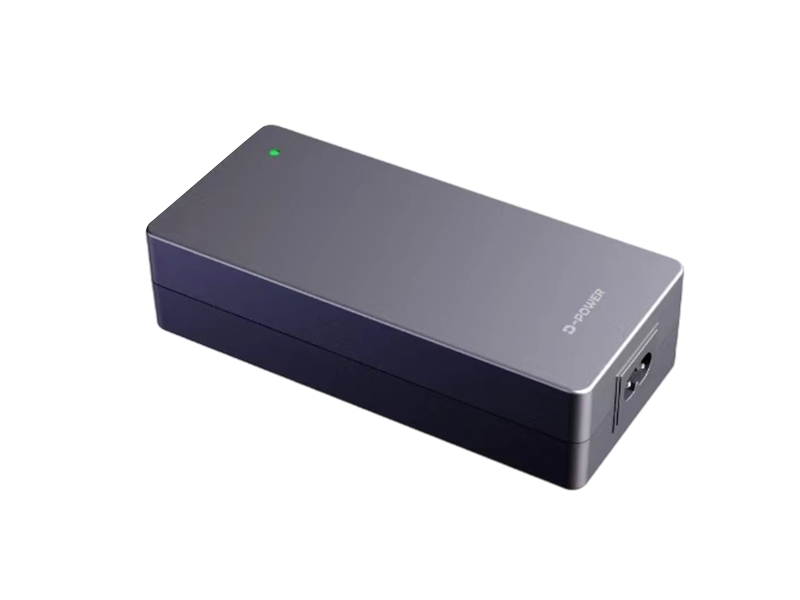
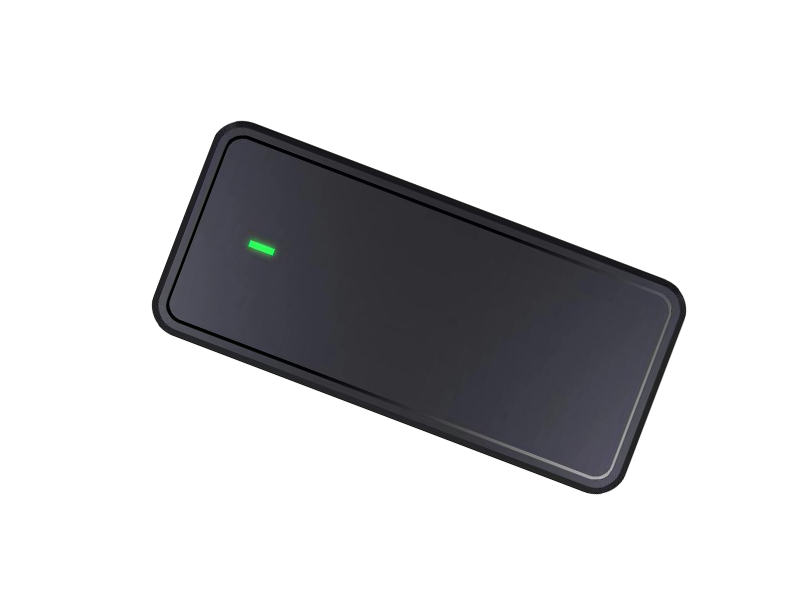
Natural convection cooling relies on passive airflow over the charger's external casing, which acts as a heat sink. The charger's internal components are thermally bonded to the casing, allowing heat to transfer from the electronics to the outside air without any moving parts. This design has no fans to fail, no filters to clog, and generates zero audible noise. Natural convection chargers are completely silent during operation, making them ideal for residential charging where noise could disturb occupants. The absence of moving parts also eliminates fan related failure modes, extending the charger's typical service life to 3 to 5 years or longer. Dpower 36V chargers use natural convection cooling across their entire product line, with efficiency ratings from 85 to 93 percent, minimizing waste heat generation.
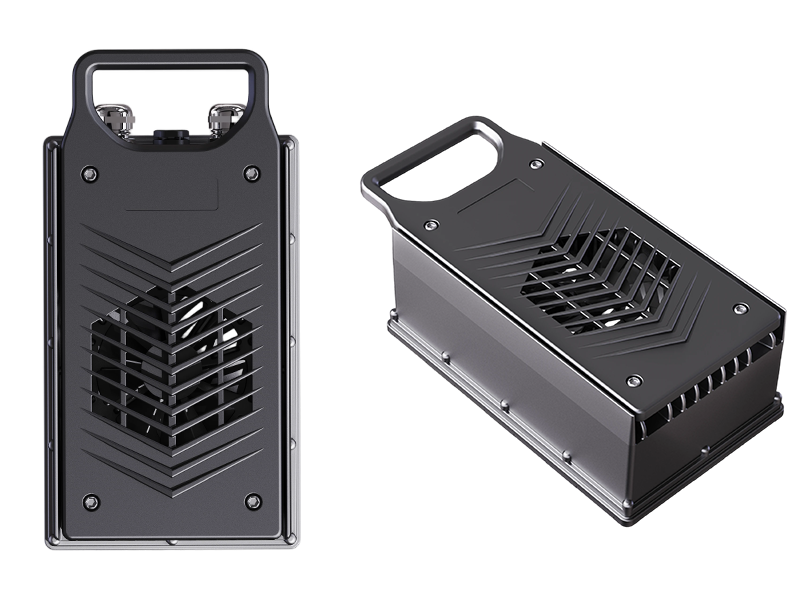
Fan cooled chargers use a small electric fan to force air across internal heat sinks, providing more aggressive cooling in a smaller package. Fans allow manufacturers to use smaller casings and higher power densities. However, fans have significant disadvantages. Fans generate audible noise, typically 30 to 50 decibels, which can be disruptive in quiet environments. Fans accumulate dust and debris, requiring regular cleaning to maintain airflow. Fan bearings wear out over time, typically after 20,000 to 30,000 hours of operation, which may be only 2 to 3 years of daily use. When a fan fails, the charger overheats and fails shortly thereafter. For applications requiring the smallest possible charger size, fan cooling may be necessary, but for most applications, natural convection provides superior long term reliability.
For high power applications above 200 watts or 5 amperes at 42V, natural convection requires larger casing surface area to dissipate heat effectively. A 200 watt natural convection charger may be 50 to 100 percent larger than a fan cooled equivalent. For applications where space is extremely limited, such as integrated onboard chargers, the size penalty of natural convection may be unacceptable. However, for portable chargers that are not permanently mounted, the larger size is generally acceptable given the reliability benefits. For 10 ampere 36V chargers producing over 400 watts of output, natural convection may not be practical, and fan cooling becomes necessary. Dpower offers both natural convection and fan cooled options depending on power level and application requirements.
Modern 36V Li Chargers incorporate communication protocols that enable the charger to exchange data with the battery management system or BMS. This smart charging capability optimizes performance and safety beyond what is possible with traditional chargers. Understanding the available protocols helps buyers select chargers that integrate properly with their battery systems.
UART or Universal Asynchronous Receiver Transmitter communication is a simple two wire protocol commonly used in e bikes, scooters, and power tools. UART provides basic data exchange including battery voltage, current, temperature, and state of charge. The charger adjusts its output parameters based on this data and can terminate charging based on BMS commands. UART is less complex than CAN and requires less processing power, making it suitable for cost sensitive applications. However, UART is point to point only and cannot support multiple devices on a single bus. For most e bike and scooter applications, UART provides adequate functionality at reasonable cost.
CAN bus or Controller Area Network communication is a more robust protocol used in automotive, industrial, and high performance e bike applications. CAN bus supports multiple devices on a single network, allowing the charger, BMS, vehicle controller, and display to all exchange data. CAN bus is highly resistant to electrical noise and can operate over longer distances than UART. CANopen is a higher layer protocol built on CAN bus that standardizes device profiles, simplifying integration between components from different manufacturers. For commercial fleets, industrial AGVs, and high end e bikes, CAN bus communication is strongly preferred for its reliability and advanced features.
NTC or Negative Temperature Coefficient thermistor communication is a simpler protocol where the battery pack contains a thermistor that the charger monitors to adjust charging parameters. As temperature increases, the thermistor resistance decreases, signaling the charger to reduce charge current or terminate charging. NTC only provides temperature data, not voltage, current, or state of charge. It is suitable for lower cost battery packs where full BMS communication is not required. However, NTC alone cannot provide cell level monitoring or balancing commands, so it is not suitable for large or high value battery packs.
Proprietary protocols are used by some manufacturers to create closed systems where only authorized chargers and batteries work together. These protocols may be based on UART, CAN, or custom physical layers. Proprietary protocols allow the manufacturer to control the charging environment and prevent use of uncertified third party equipment that could compromise safety or performance. For OEM customers, many manufacturers including Wuxi Dpower Electronic Co., Ltd. offer proprietary protocol development to brand requirements. The Dpower protocol is available as a stable, reliable alternative for customers who prefer a proven solution without developing their own protocol.
Safety is paramount when charging lithium batteries, which have different failure modes than lead acid batteries. A quality 36V Li Charger incorporates multiple protection circuits to prevent hazardous conditions. Understanding these protections helps buyers evaluate charger safety and reliability.
Reverse polarity protection prevents damage if the charger output is connected to the battery with reversed positive and negative connections. Reverse polarity can damage both the charger and the battery, potentially causing fire or explosion. Protection methods include series diodes which block reverse current but reduce charging efficiency, or MOSFET based circuits that disconnect the output when reverse polarity is detected. For mobile applications, connectors that are physically keyed to prevent reversal, such as XLR or Anderson connectors, provide additional protection. Dpower chargers include reverse polarity protection as standard on all models.
Anti spark protection eliminates the electrical arc that can occur when connecting a charger to a battery that is at a different voltage potential. The spark occurs because the charger's output capacitors charge rapidly when connected to the battery. Anti spark circuits pre charge the capacitors through a resistor before making full contact, eliminating the spark. This is particularly important in potentially flammable environments such as gasoline stations, chemical plants, or dusty workshops. Anti spark also prevents pitting and erosion of connector contacts, extending connector life. For e bike and scooter applications where connectors are mated frequently, anti spark is a valuable feature.
Over temperature protection monitors internal charger temperature and reduces output power or shuts down if temperature exceeds safe limits. Chargers generate heat during operation, especially at high output currents. If the charger is operated in a confined space or at high ambient temperatures, internal components can overheat, leading to failure or fire. Thermal protection uses thermistors on critical components including switching transistors, transformers, and output rectifiers. When temperature exceeds a set point, typically 80 to 100 degrees Celsius, the charger reduces output current or enters a timed restart cycle until temperatures normalize. For natural convection chargers, thermal protection is essential because there is no fan to provide cooling airflow.
Timing protection or charge time limiter is a software based safety feature that terminates charging if the battery does not reach full charge within a preset time window. This protects against battery faults that cause abnormally long charging times, such as internal shorts or cell imbalances. The timing limit is typically set to 150 to 200 percent of the expected normal charge time. If the timer expires, the charger shuts down and indicates a fault condition. The timer resets when the charger is disconnected from AC power. For fleet operators, timing protection provides an additional safety layer against unattended charging failures.
Different applications require specific 36V Li Charger configurations. Understanding these requirements helps buyers select the correct charger specifications for their equipment and operating conditions.
For e bikes and electric scooters, compact portable chargers with 2 to 5 ampere output are standard. Chargers should be lightweight with integrated AC plugs for direct wall outlet connection. Communication with the battery BMS is typically via UART or proprietary protocol. For European markets, chargers must comply with EN 15194 for electrically power assisted cycles. For North American markets, UL 2271 certification for the battery and charger system is often required. Dpower 36V chargers for e bike applications are available with country specific AC plugs and multi language labeling.
For electric wheelchairs and mobility scooters, medical grade safety and reliability are paramount. Chargers for medical applications should have the highest levels of electrical isolation, fault protection, and noise immunity. Output current is typically 5 to 10 amperes for larger batteries used in wheelchairs. Natural convection cooling is strongly preferred because fan noise can be disturbing to medical device users. Communication protocols are often simpler, with LED status indicators providing charge status information. For European markets, medical device compliance including IEC 60601 is required for chargers sold as medical equipment. Dpower offers medical grade 36V chargers with enhanced isolation and certification.
For electric lawn mowers and garden equipment, chargers must withstand outdoor conditions including dust, moisture, and temperature extremes. IP65 or higher sealing is required to protect against water jets from garden hoses and pressure washers. Output current is typically 5 to 10 amperes for 36V battery packs used in lawn mowers. Chargers are often designed for wall mounting in garages or workshops. For commercial landscaping fleets, chargers with multiple output ports allow charging multiple batteries simultaneously from a single AC input. Dpower offers IP67 sealed 36V chargers for outdoor applications with enhanced corrosion protection.
For automated guided vehicles or AGVs and industrial robotics, 36V chargers must support CANopen communication for integration with fleet management systems. Output current is typically 10 to 20 amperes for fast charging of larger battery packs. Chargers are often permanently mounted on the vehicle or at charging stations. For opportunity charging during brief pauses in operation, high current chargers capable of 1C or higher rates are required, though battery cycle life may be reduced. For industrial applications, chargers must meet electromagnetic compatibility standards for operation near sensitive equipment. Dpower offers industrial 36V chargers with CANopen, ruggedized enclosures, and wide operating temperature ranges.
What is the nominal voltage of a 36V lithium battery charger?
The nominal output voltage of a charger designed for a standard 36V lithium ion battery pack is 42V. A 36V pack typically uses 10 lithium ion cells in series, known as 10S configuration. Each cell has a maximum charge voltage of 4.2V, so 10 cells multiplied by 4.2V equals 42V. The charger must output exactly 42V to fully charge the pack. For lithium iron phosphate or LFP packs labeled 36V, the configuration is 12S with maximum charge voltage of 43.8V. Always verify charger output voltage matches your specific battery chemistry before purchase.
Can I use a 36V Li charger to charge a 36V lead acid battery?
Not recommended. A 36V lithium charger outputs 42V maximum and terminates completely when full charge is reached. A 36V lead acid battery requires a float stage to maintain charge, typically at 40.8V. Using a lithium charger on a lead acid battery will not provide the necessary float maintenance, causing the battery to self discharge and sulfate over time. Additionally, the lithium charger's current based termination may trigger prematurely on a lead acid battery. For lead acid batteries, always use a charger specifically designed for lead acid chemistry with float capability.
How do I choose the correct amperage for my 36V e bike charger?
Amperage determines charging speed. For standard e bike batteries of 10 to 15 ampere hour capacity, a 2A to 3A charger will fully charge the battery in 4 to 6 hours. This is suitable for overnight charging. For larger batteries of 15 to 20 ampere hours, a 4A to 5A charger reduces charging time to 3 to 4 hours. The battery's BMS must be rated for the charge current you select; this information is in the battery specifications. Using a higher amperage charger than the battery is rated for can trip BMS protection or damage cells. For most riders, a 3A to 4A charger provides the best balance of charging speed and battery life.
What is the difference between UART and CAN communication in a 36V charger?
UART or Universal Asynchronous Receiver Transmitter is a simple two wire protocol that provides basic data exchange between charger and BMS, including voltage, current, temperature, and state of charge. UART is point to point only and is commonly used in standard e bikes and scooters. CAN or Controller Area Network is a more robust multi master protocol that supports multiple devices on a single network. CAN is highly resistant to electrical noise and allows the charger to communicate with the vehicle controller, display, and BMS simultaneously. CAN is preferred for commercial fleets, industrial AGVs, and high performance e bikes. The choice depends on your BMS and vehicle controller capabilities.
What is the typical minimum order quantity for custom 36V Li chargers?
Minimum order quantities for custom 36V Li chargers vary by manufacturer and specification complexity. For simple customizations such as specific output connectors, LED colors, or label printing on standard charger platforms, manufacturers typically require 500 to 1,000 pieces. For fully custom chargers requiring unique enclosure design, communication protocols, or output specifications, minimum orders of 2,000 to 5,000 pieces are typical. For OEM customers integrating chargers into equipment, manufacturers such as Wuxi Dpower Electronic Co., Ltd. offer tiered pricing with lower minimums for initial orders followed by larger production volumes. Lead times for custom chargers range from 60 to 120 days depending on certification and tooling requirements.
1. IEC 62133-2:2021. Secondary cells and batteries containing alkaline or other non-acid electrolytes - Safety requirements for portable sealed secondary cells. International Electrotechnical Commission.
2. UL 2271:2022. Standard for Batteries for Use in Light Electric Vehicle Applications. Underwriters Laboratories.
3. EN 15194:2017. Cycles - Electrically power assisted cycles - EPAC Bicycles. European Committee for Standardization.
4. ISO 12405-4:2018. Electrically propelled road vehicles - Test specification for lithium-ion traction battery packs and systems. International Organization for Standardization.
5. GB/T 36972-2018. Safety requirements for lithium-ion batteries for electric bicycles. Standardization Administration of China.

 No.18-9 Zhang Hong Road, Huishan District, Yanqiao Street, Wuxi City, Jiangsu Province, Čína
 +86-510-83138966
 [email protected]
PRODUKTY
Velkoobchodní nabíječka 24V lithiových baterií, 24V nabíječka baterií EbikeNabíječka 24V Nabíječka 36V Nabíječka 48V a 52V Vysoce výkonná nabíječka lithiových bateriíMLUVTE S NÁMI
autorská práva © Wuxi Dpower Electronic Co., Ltd. Všechna práva
Rezervováno.
Vlastní výrobce inteligentních lithiových nabíječek baterií